Tuesday, May 30, 2006

INDIAN ALCOHOLIC BEVERAGE INDUSTRY STATISTICS: IWSR REPORT

Below is an over-simplified analysis of the very real differences between India and all other markets; this is drawn from the opinions of Indian management who understand the markets in great depth.

  • India is 28 countries in the context of one. (There are 31 states but some are very small). There are at least 23 quite different markets of importance. In practice, these are largely self-contained markets, with limited cross-border sales, except by smuggling.
  • Each state levies taxation on alcohol at its own determined rates and excise duties, and controls distribution channels in its own way. It is a state-by-state not a national market. Taxes are levied, often at relatively high rates in relation to Indian prices, on all alcoholic products crossing the state borders. The result is that it is essential to have centres of production spread over the major states.
  • The intention to reduce alcohol consumption is written into the Constitution.
  • The population is evidently huge (945 million in 1996 and over 1.1 Billion during 2004). It is still growing by 20 million plus every year, though this may have eased in 2003. However, 600 million at least are still outside the market for anything except very cheap Country Liquor. Advertising has always been officially illegal. In practice, all major brands spent heavily on Surrogate brands under the same brand name (on glasses, mineral waters, bottle openers, fashion articles for men etc.).
  • The Distribution system is still the same for Beer as for Spirits and Wine. All outlets must be licensed; Wholesalers, Retailers, Bars and Restaurants, and Bonded Warehouse operators. They pay the, varying, States licence fees. These can, at present, only sell Indian-made Liquor over most States. It continues to be expected that Beer and Wine may shortly be permitted to sell in more outlets.
  • South India is the largest consumer of IMFL and Beer. It is more important than North and West together. Tax-paid Country Liquor is most important in North and West.
  • The West is declining due to high taxes, and the North increasing in Country Liquor and Beer particularly.

Download the full report: India Alcoholic Beverages Industry Statistics.pdf

Friday, May 26, 2006

BREWING INDUSTRY VITAL TO EUROPE’S ECONOMY

A study conducted by Ernst & Young has confirmed that Europe is the most important region in the world for beer production.

It is claimed to be the first report to comprehensively quantify the economic contribution of the brewing sector in Europe. According to the report, there are more than 3,000 small and medium-sized enterprises in Europe’s brewing sector, which helped to foster Europe’s regional development and the competitiveness of its agriculture.

The report also estimated that the total employment effect of the brewing sector in the EU amounts to 2.6m. Direct employment from brewing in the EU is put at 164,000, but indirect employment is significant. According to the study, for each job offered in the brewing sector, one job is generated in retail, two in supply sectors and almost 12 in the hospitality sector, as well as 147,000 jobs in agriculture. The brewing industry generates total tax revenues of around EUR39bn (US$50.4bn), more than the annual government expenditure of Finland or Poland, the report claimed. The total contribution of the brewing sector to the European economy in terms of value added is EUR57.5bn, the report said, equivalent to the GDP of the Polish or Austrian economy in the last quarter of 2004.

If you are interested in the full report (pdf format) please mail your requests to Brew Master

Thursday, May 25, 2006

AIBA RECOMMENDS BEER RETAILING ON FIXED FEE BASIS

In order to give a fillip to the Indian beer industry, the All India Brewers Association (AIBA) has called the state governments to draft their excise policies on the basis of the Model Excise Policy suggested by the food processing ministry. AIBA has also called for adopting the retailing of beer on a fixed fee basis as opposed to the auction system.

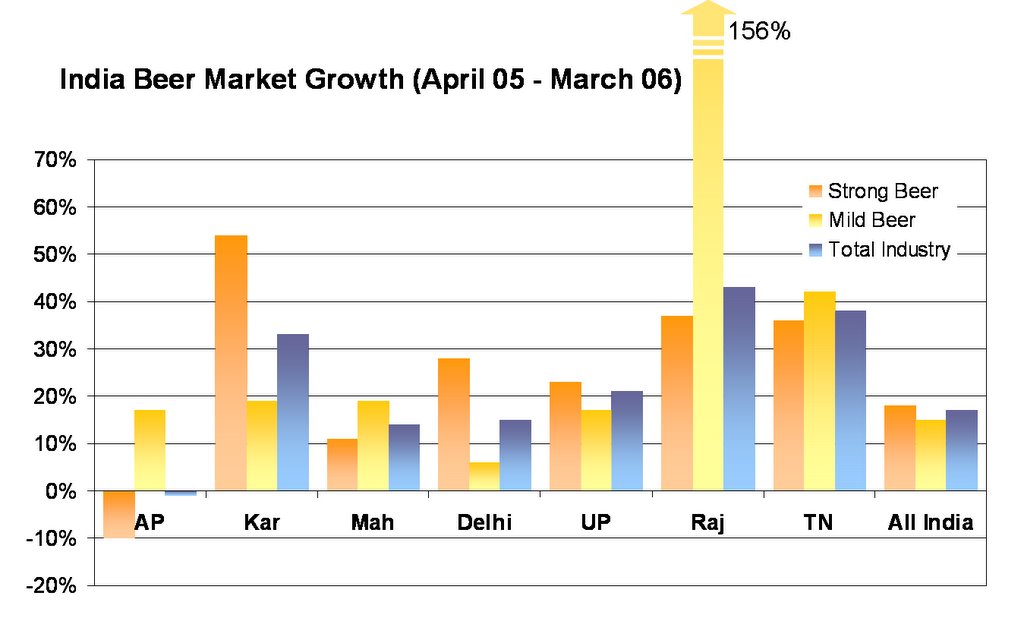
In 2004-05, the beer market was pegged at 9.4 crore cases and registered a growth of 14% to touch 10.9 crore cases, because of the excise policy of Rajasthan and Karnataka.

These two states also moved from the auction system of retailing to a fixed fee system, thus impacting the volume sales of beer. If other states also follow this, it would promote the beer industry, which is by far safer than hard liquor. AIBA is also recommending removal of inter-state levies and restriction of licence fees to exceed 5% of MRP.

The food processing ministry in its model excise taxation paper has called for the preferential treatment to beer. It has argued that the growth of beer industry, will lead to multi-fold benefits to the farmers.

"If the demand for beer in India were to grow to the same level as spirits, the demand for malted barley along with other crops used for beer production would increase 20-fold, and over 10 lakh farmers would benefit. Similarly, the economic value generated at the farm level from barley used by the beer industry would go up from approx Rs 60 crore to Rs 1,200 crore," the paper said.

Cultivation of hops (flavouring and stability agent in beer) presents another major opportunity for farmers, as it is grown in hilly regions where crop opportunities are few, the paper adds. As per industry estimates, 45-50 tonne of hops worth Rs 70 lakh is currently being grown in India impacting 650-700 farmers.

Wednesday, May 24, 2006

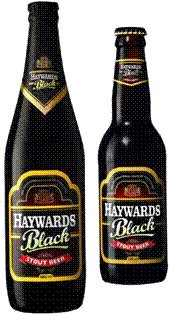
INDIA'S FIRST STOUT BEER - HAYWARDS BLACK

In one of the biggest and most courageous new product launches, SAB Miller has launched Haywards Black, India's first stout beer, which with an alcoholic percentage of around 7% will rank as a strong stout beer. We will say no more. Taste it and form your own opinion.

Deep, dark and flavourful, stout earns its character from brewing with highly roasted malts. Stout features intense malt and caramel flavours, and depending on the variety, ranges from sweet to dry and distinctively bitter.

RAJASTHAN CASE STUDY

Year 2005 saw Rajasthan government changing from auction system to a new system of corporation. The aim was to remove the monopolistic nature of the business wherein the contractors were becoming more powerful and in the process consumer, manufacturers and government interest were not being protected.

This new system will make sure that this monopolistic cartel is broken and the situation is a win – win for the other stakeholders. The consumer will get the product at a realistic rate and the government will benefit in terms of revenue. According to a rough estimate the government is set of get revenue of Rs 1350 crore this year Vis a Vis a revenue of Rs 1276 crore last year. Therefore just by doing some structural changes the government will be able to earn Rs 74 crore, not to mention the benefits to the manufacturing companies and the consumer.

No wonder that more brewers have announced their plans to enter the state given the wise move taken by the government to minimize the impact of the middlemen on the entire value chain.

Listed below are some of the benefits this policy has given to the state.

  • Fixed MRP – Consumer is protected as no arbitrary pricing as is the case with the auction system.
  • Brand availability – Now brands are available as per consumer demand and not driven by contractors desire to push high margin lesser known brands.
  • Manufacturers get a better deal with the State Corporation in charge of wholesale distribution
  • No credit exposure
  • Not at the mercy of the contractors arbitrariness
  • Better price realization
  • It is an investment friendly change in policy, forward looking and pragmatic

Going forward, the government should keep up the process of reforming system while creating policies which are beneficial to the state economy and to its people.

Thursday, May 11, 2006

NO CHILLED SUMMER FOR BEER INDUSTRY

May be Chilled Beer??

Interesting article which appeared in Mumbai Mirror recently.

Age-old excise policy on liquor and multiform regulations are hitting the beer industry

Brewers in the country are asking not to be regulated under the Punjab Excise Policy of 1905 for distilleries as it now affects them adversely. The government’s policy, which inadvertently discourages breweries, while encouraging distilleries, has put the beer industry at a disadvantage.

With regard of the Punjab Excise Policy, there are certain compliances mentioned in the policy, which are no longer feasible – and despite repeated pleas to the government there is no amendment to the age-old law.

According to the policy, liquor manufacturers cannot operate at nights and the operator is required to close operations after dark till the next day.
This policy is alright for the distilleries as there are chances of making spurious spirits and also of excise theft during the wee hours. However, there is no scope of making spurious beer as that process is as costly.

Also, there are different regulations in different states. An individual of 18-years and above can consume alcohol in Goa but not in Mumbai. Mumbai’s age criterion is 21-years whereas in Punjab, the age bar is 25 years.

Average global taxes on price of the beer are 33.6 per cent whereas, in India, taxes on beer are about 49 per cent and therefore, affordability of beer in the country is lowest compared to world standards. This way, the government is encouraging hard-liquor that is more harmful to the consumers.